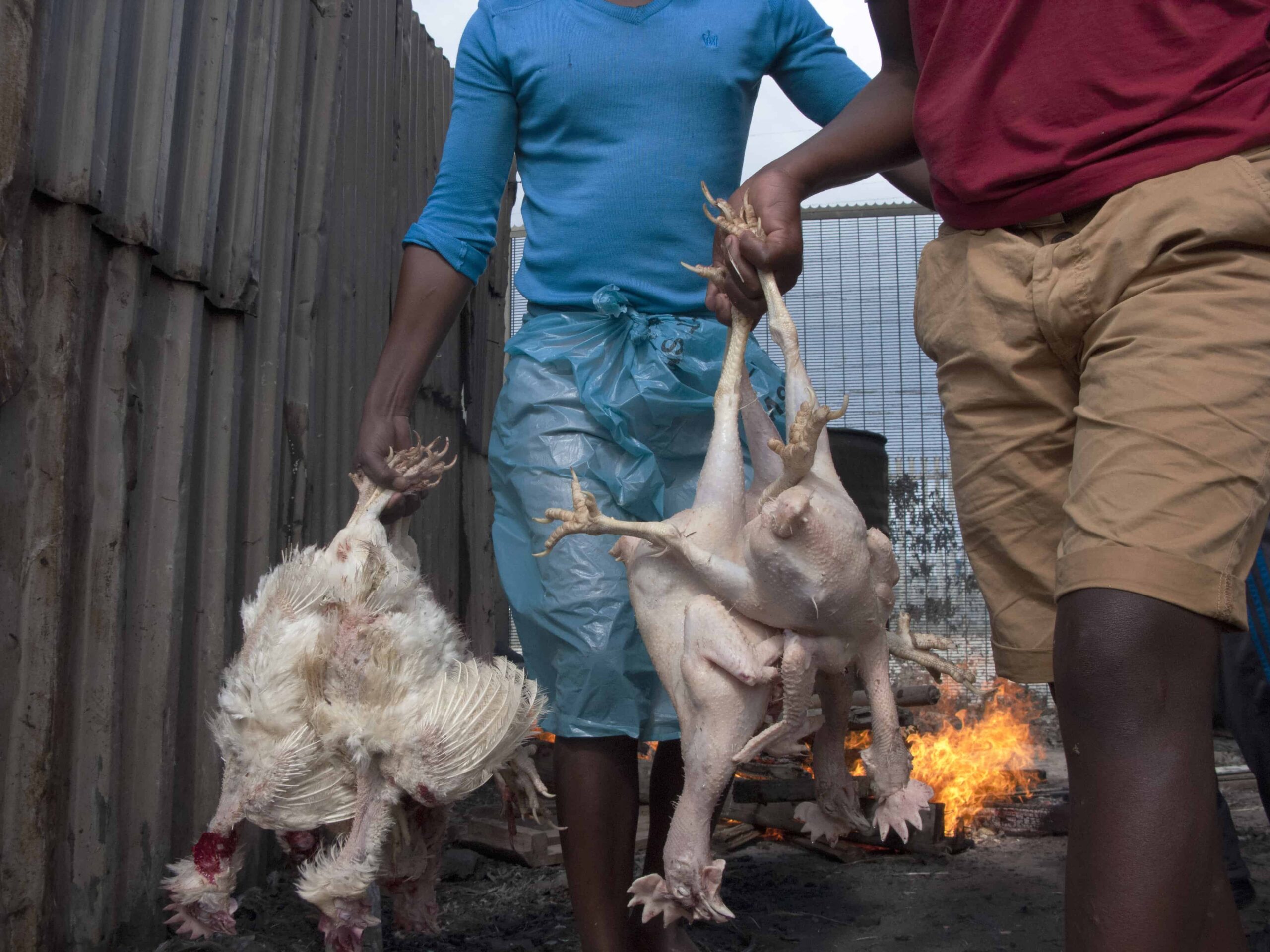
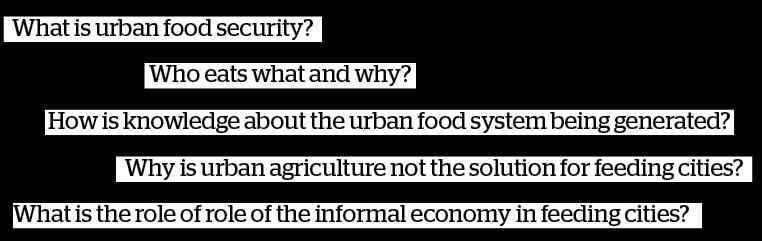
Food is fundamental not only to well-being, but to our social and economic lives. Despite this, one of the biggest challenges facing many people in cities all over the world today is hunger. As cities rapidly urbanise, different pressures are placed on the food system which has resulted in the least nutritious food being the most affordable. This seminar series will explore the informal economy, food systems, food security and urbanisation. The first seminar is entitled 'The Informal Economy’s Role in Feeding Cities - A Missing Link in Policy Debates?' and will be presented by Caroline Skinner and Gareth Haysom. Abstract The paper starts by considering the genealogy of the term ‘informal sector’ and then reviews the international context – urbanisation trends and the latest estimates on the size and contribution of the informal economy. The former confirm Crush and Frayne’s contention of the likelihood of an urban future for the majority of Africans and latter suggest that informal work is a predominant source of non-agricultural employment on the most regions of the Global South. Attention is then turned to the South African informal economy, which although smaller than our developing country counterparts, is still a significant source of employment. The informal economy is thus playing a key role in household income – a key aspect of accessibility, particularly in urban areas. The paper then outlines the evidence on the informal economies role in food sourcing of poorer households. The paper critically assesses the current food security policy position in South Africa and the post-Apartheid policy response to the informal economy in general both nationally and in key urban centres. We trace a productionist and rural bias in the food security agenda and argue that the policy environment for informal operators is at best benign neglect and at worse actively destructive. Speaker bios Caroline Skinner is a Senior Researcher at the African Centre for Cities at the University of Cape Town and Urban Policies Research Director for the global action-research-policy network Women in Informal Employment: Globalizing and Organizing (WIEGO). For over 15 years, Skinner’s work has interrogated the nature of the informal economy with a focus on informing advocacy processes and livelihood-centred policy and planning responses. She has published widely on the topic. Dr Gareth Haysom holds a Ph.D in Environmental and Geographic Sciences from UCT. The focus of his Ph.D was on urban food system governance. Gareth is the southern cities project coordinator for the Hungry Cities Partnership project at the ACC. He also works on the Consuming Urban Poverty research project. Venue: Studio 3, EGS Building, Upper Campus, UCT